


Root canal
Save the tooth, end the pain
Root canal treatment removes infection and protects your natural tooth, under local anaesthetic.
About the treatment
Treating the inside of the tooth
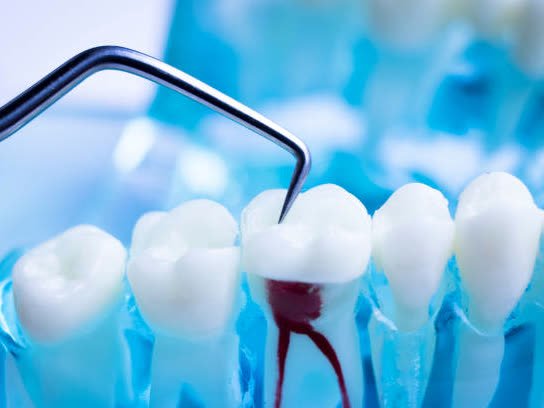
Inside each root is a thin channel, the root canal, that holds the tooth’s nerves and blood vessels. Decay, an injury or a poorly fitting filling or crown can let bacteria in, causing infection and pain.
Root canal treatment, also called endodontic treatment, removes the infection, cleans and fills the canals and protects the tooth from further infection.
Why patients choose it
- Keeps your own toothTreating the canal saves the tooth instead of removing it.
- Like having a fillingCarried out under local anaesthetic and usually straightforward.
- Back to normal quicklyYou can carry on as usual once the anaesthetic wears off.
- Explained firstEvery step is explained before it begins.
The procedure
What happens during treatment
Numbing
The tooth is completely numbed with a local anaesthetic.
Cleaning
Tiny instruments open the tooth and remove the infected pulp, then clean and shape the canals.
Filling
The canals are filled with a rubbery material called gutta-percha and sealed with a temporary filling.
Restoring
The permanent restoration, often a crown, is placed at a separate appointment.
Questions
Before you book
Anything else on your mind? Ask Dr. Doaa at your consultation, or write to us.
What are the signs I might need a root canal?
Toothache, sensitivity to hot and cold, and pain when eating or drinking. These can fade when the pulp dies, then return with swelling of the face or gums. If that happens, contact us straight away.
Will I need time off work?
Usually not. You can carry on as normal once the anaesthetic wears off. Full healing takes about a week, so chew carefully and keep up your oral hygiene.
Is root canal treatment painful?
It is carried out under local anaesthetic and is usually a straightforward procedure, much like having a filling.
Related treatments


